
Ensuring Alaska’s
Energy Security
Benefits of the CI LNG Project
Alaskans have always pioneered the solutions they need, when they need them. The Cook Inlet LNG project is no different.
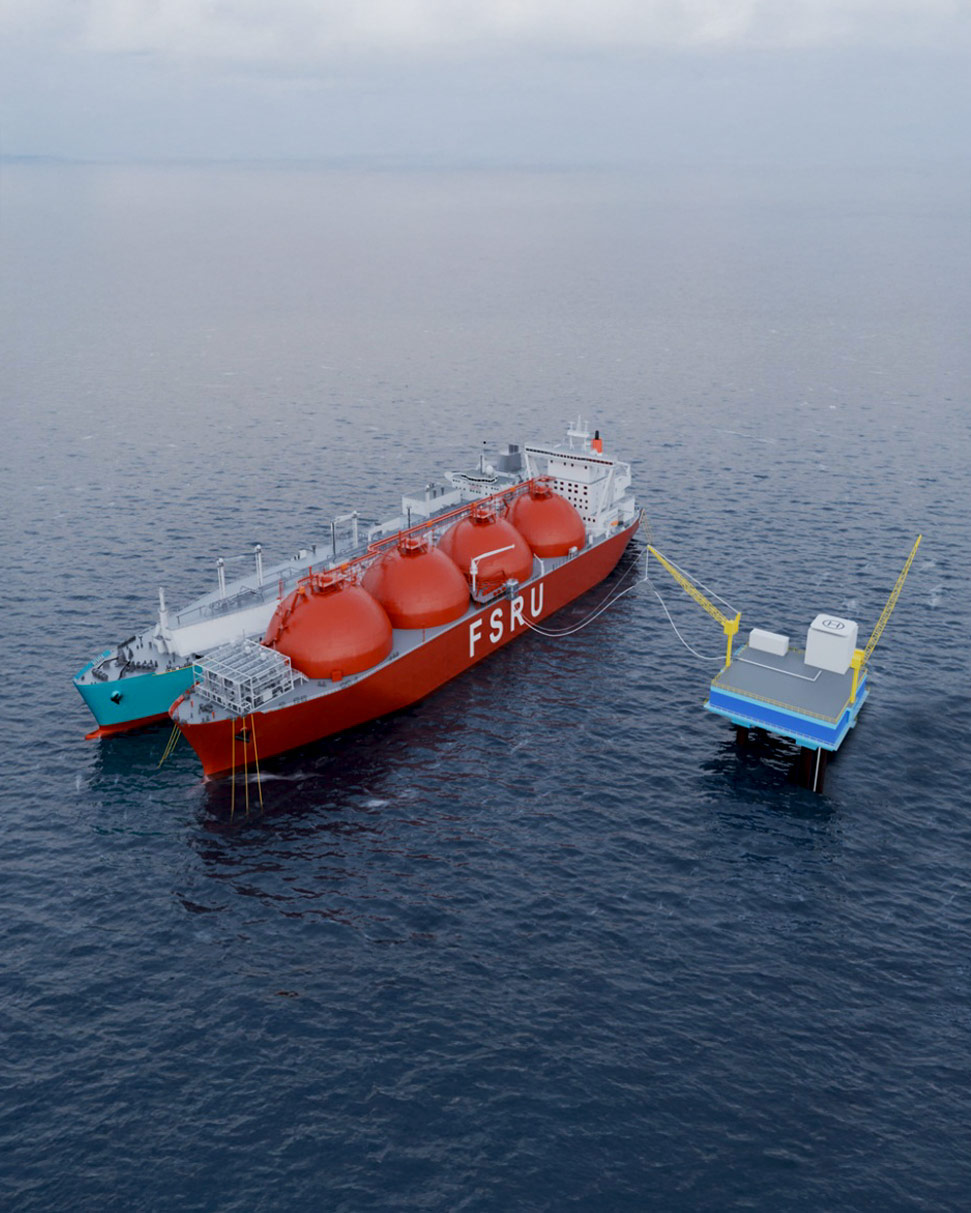
The project utilizes a state-of-the-art FSRU system designed for efficiency, flexibility, and environmental stewardship and which currently operates in some of the harshest conditions in the world. Operating on natural gas with a closed-loop regasification process that requires no seawater, the system offers scalable throughput capacity to meet current and potential future demand.
The FSRU will be moored adjacent to the existing Osprey Platform and use an elevated, high-pressure gas transfer system to deliver vaporous natural gas to the platform, where existing, repurposed subsea pipelines will transport it safely to shore. LNG cargos will be periodically delivered to the FSRU using proven ship-to-ship transfers, a globally accepted, safe, and efficient solution. This is new gas delivery with no new facilities.
Engineered for Alaska’s harsh environment, the project’s design ensures reliable performance, minimal environmental footprint, and the flexibility for future expansion if the market requires. All of this allows for abundant, secure energy that keeps business moving and Alaska’s economy growing with no delays due to supply shortfalls and no impacts to current customers.
- Addresses natural gas shortfalls and supply decline with deliveries beginning in mid-2029.
- Strengthens Alaska’s energy security while supporting economic growth.
- Adds no new terminal infrastructure – only a mooring system for the FSRU
- Provides dependable access to clean-burning fuel.
FSRU Solution
for Reliable Delivery
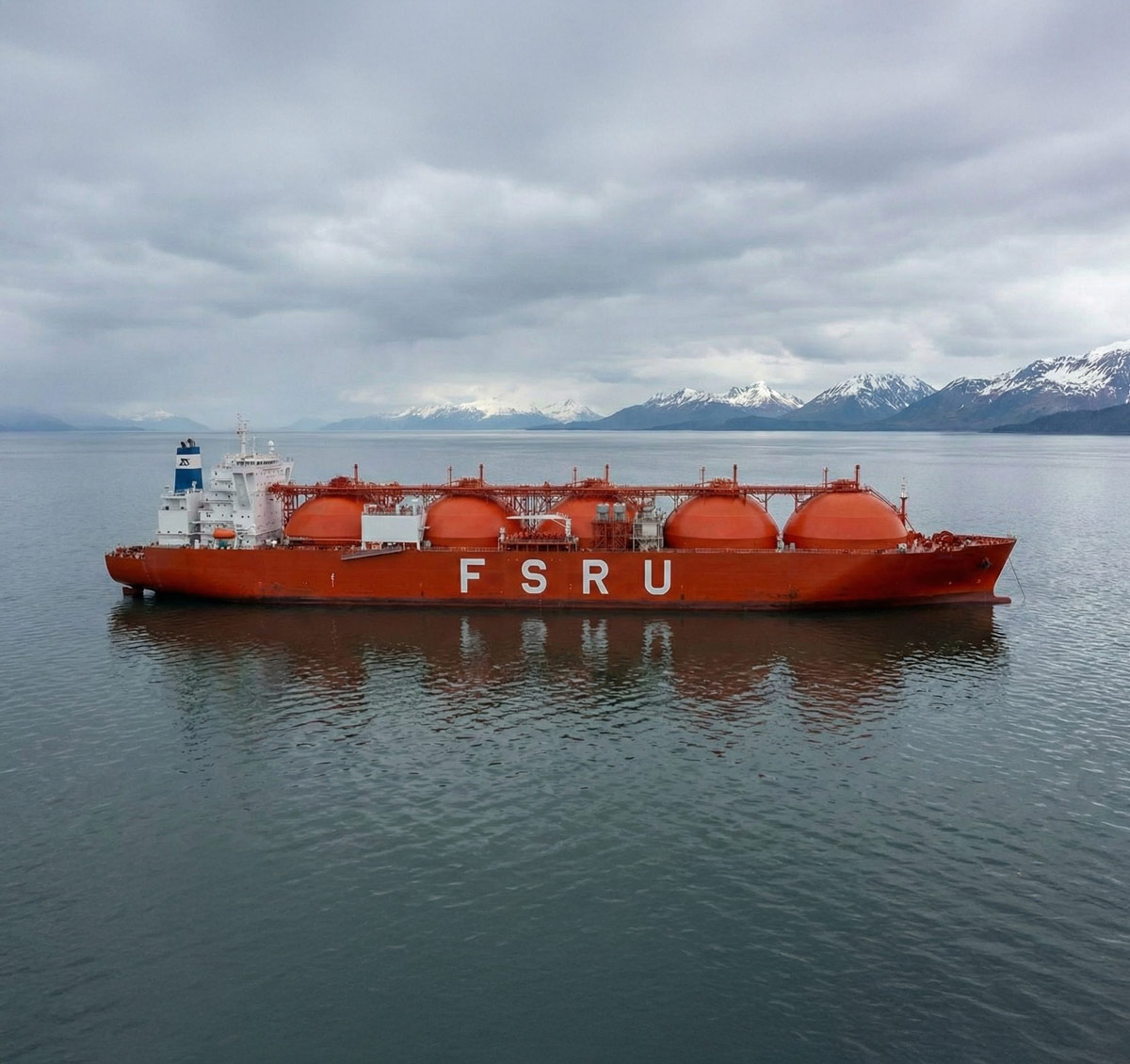
Our natural gas import solution is built around an FSRU, a self-contained offshore LNG terminal that safely receives, stores, and regasifies LNG for delivery into the local pipeline network.
- Proven Technology | FSRUs have been in service for more than two decades, providing cost-effective, proven energy security in diverse regions and built to operate in challenging marine and weather conditions worldwide. Today, roughly 50 FSRUs are in operation across the globe, demonstrating a long and dependable record of safe performance.
- Infrastructure Optimization | The FSRU will supply pipeline-quality natural gas through the existing Osprey Platform and existing subsea pipelines. This integration eliminates the need for new onshore and offshore fixed infrastructure, reducing both cost and environmental footprint while ensuring dependable energy delivery to downstream markets.
- Reliable Operation | LNG carriers will transfer cargoes directly to the FSRU using standard ship-to-ship transfer operations, a globally established and trusted process. The vessel’s design incorporates multiple layers of redundancy and continuous monitoring, ensuring uninterrupted and safe operation in all conditions.
- Minimal Impact | Positioned safely offshore, outside commercial shipping lanes, CI LNG will operate with minimal visual or operational impact on the surrounding area. The result is a reliable, low-impact, and immediately deployable solution to meet Alaska’s near-term energy needs.
Built for harsh conditions and designed for minimal environmental impact, Cook Inlet LNG ensures long-term energy reliability for southcentral Alaska and beyond.
Strategic Project Area
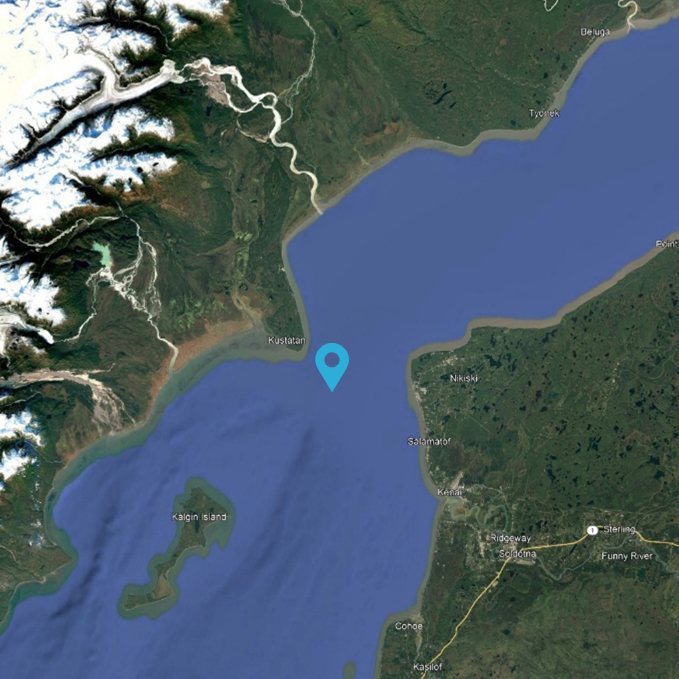
The CI LNG project is located approximately two miles offshore east of West Foreland in Cook Inlet, adjacent to the existing Osprey production platform. This location provides direct access to established energy infrastructure while avoiding the need for major new onshore development.
Maximizes Use of Existing Infrastructure
- The project will use existing subsea pipelines for natural gas delivery, ensuring reliable supply for Southcentral Alaska. The use of the Osprey production platform combined with the avoidance of new pipelines eliminates the need for new fixed infrastructure reducing both cost and environmental impact.
Scalable for the Future
- The system’s configuration could support future expansion, given the FSRU’s full design capacity of approximately 110 bcf/year (300 MMscf/day). This flexibility ensures that Cook Inlet LNG can meet the region’s energy and storage needs today while maintaining the ability to grow with future demand, as needed.
A Reliable and Responsible Solution
- By leveraging proven infrastructure and an offshore siting strategy, the project delivers rapid implementation, strong reliability, and a low environmental footprint. Cook Inlet LNG represents a focused, efficient energy solution designed for Alaska’s unique conditions.
Our Partners








Our Leadership Team
The Cook Inlet LNG team brings decades of combined experience spanning LNG infrastructure, project development, finance, regulatory strategy, and operations. Together, they represent a deep bench of technical and commercial expertise in engineering, procurement, construction, and energy markets across Alaska and around the world. Their backgrounds include leadership in global LNG development, financial management of large-scale energy projects, and extensive regulatory and stakeholder experience within Alaska’s resource industries. This diverse and seasoned team ensures Cook Inlet LNG is positioned to deliver a technically sound, economically viable, and environmentally responsible solution for Alaska’s long-term energy needs.